The Ethics of Absurdism: Can Moral Life Survive Without Cosmic Purpose?
2025-09-28 • Philosophy
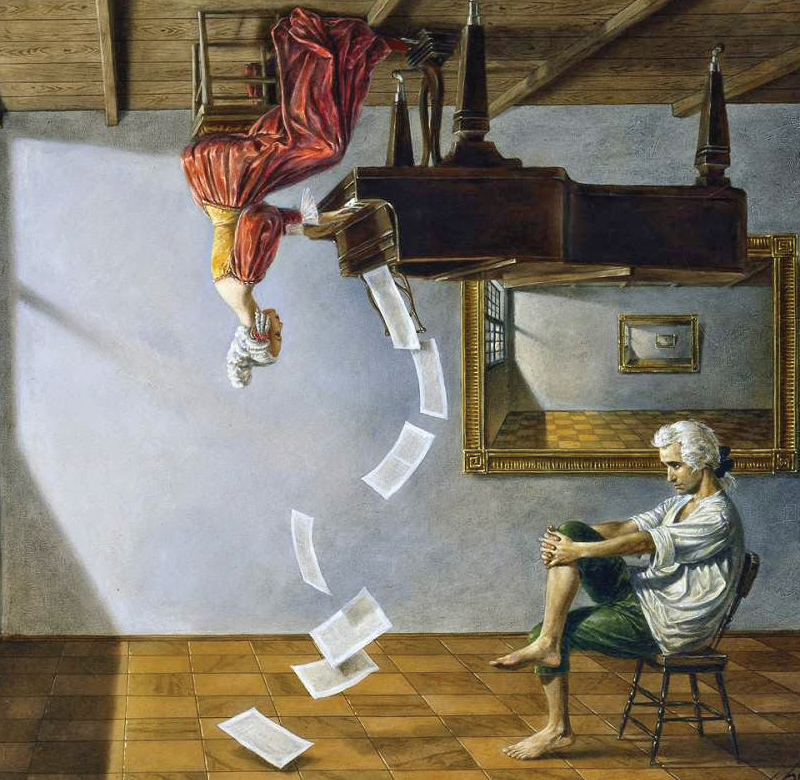
“Man is the only creature who refuses to be what he is.” — Albert Camus
When the Universe Stays Silent
We’ve all had those late-night questions: What’s the point of it all? If the universe doesn’t come with a built-in purpose, are we just floating in an indifferent void?
And if that’s true, what about morality? Can we still talk about right and wrong, responsibility, or even caring for others without some cosmic lawgiver?
That’s the tension at the heart of absurdism, a philosophy most famously explored by Albert Camus. Humans crave meaning. The universe doesn’t hand it to us. That clash is what Camus called the absurd.
Absurdism Isn’t Nihilism
Camus opened his book The Myth of Sisyphus by saying there’s only one truly serious question: suicide. If life has no ultimate purpose, is it worth living?
His answer was yes — but not by pretending there’s hidden meaning. Instead, he argued we should confront absurdity directly. To live fully, rebelliously, and without illusions.
Absurdism doesn’t say “nothing matters.” That’s nihilism. Instead, it says: nothing is given meaning — so it’s up to us to create it.
Without Cosmic Law, What Grounds Morality?
For centuries, morality found its foundation in transcendent sources — God, fate, reason, or natural law. Ethical behavior was thought to reflect obedience to something larger, something eternal. But if those cosmic anchors dissolve under the light of absurdism, what remains to guide us? Does morality lose all meaning once the heavens fall silent?
Albert Camus didn’t think so. He rejected both despair and divine authority, proposing instead a morality born from lucidity and shared struggle. When we confront the absurd — the clash between our hunger for meaning and the universe’s indifference — we realize that no external law will save us. Yet, paradoxically, that realization doesn’t destroy morality; it redefines it.
In a godless, purposeless world, our moral compass shifts from obedience to **empathy**. Camus suggests that once we understand the absurd condition, we can no longer justify cruelty or indifference, because we recognize in others the same fragile consciousness we carry. To act ethically is to act in solidarity — to affirm life despite its futility, and to relieve the suffering we intimately understand.
If there is no cosmic referee, then all we have is each other.
In that sense, morality without cosmic law becomes a human project — not decreed from above, but woven from compassion, rebellion, and mutual recognition. The absurd doesn’t erase ethics; it roots it in the only certainty we share: our coexistence within an indifferent universe.
Sartre’s Twist: Freedom as Responsibility
Jean-Paul Sartre, often mentioned alongside Albert Camus (even though their friendship famously fell apart), took the conversation about meaning and morality in a bold direction. His key idea? “Man is condemned to be free.”
What does that mean? In Sartre’s world, there’s no God handing out a script, no cosmic rulebook, and no destiny waiting to unfold. It’s just us — human beings — writing the story as we go. Our freedom is absolute, and that can feel both exciting and scary.
At first, this kind of freedom might sound like total liberation. But Sartre argued that it’s also a heavy burden. Without a higher power to tell us what’s right or wrong, every decision rests entirely on our shoulders. There’s no one else to blame, no fate to hide behind. That’s why Sartre said freedom comes with total responsibility.
Each choice we make shapes not only our own lives but also the kind of world we create for others. When we choose kindness, courage, or honesty, we’re quietly declaring that these values matter — not just for us, but for everyone. Sartre believed this awareness could guide us toward a more authentic and ethical life, one built on self-awareness rather than fear.
Freedom isn’t just about doing whatever we want — it’s about realizing that what we choose defines who we are.
In the end, Sartre’s message is both challenging and empowering. Without cosmic rules, we become the authors of our own meaning. Our task isn’t to find purpose written somewhere in the stars, but to create it here, through our choices, our actions, and our responsibility to one another.
Kierkegaard’s Different Road
Long before Camus and Sartre made existentialism famous, there was Søren Kierkegaard — a Danish philosopher often called the “father of existentialism.” He also saw the tension and confusion that come from living in an absurd world, but his answer took a very different path.
For Kierkegaard, the absurd wasn’t just about a meaningless universe — it was about the clash between human reason and faith. We long to understand everything through logic, but faith asks us to believe in something we can’t fully explain. That, to him, was the true absurd condition of human life.
His solution wasn’t rebellion or pure freedom. Instead, he proposed what he called a “leap of faith.” It meant choosing to trust in God even when reason falls short — to believe despite the absurd. Kierkegaard saw this leap not as blind submission, but as a courageous act of personal commitment, a way to find meaning beyond human understanding.
Albert Camus later criticized this idea, calling the leap of faith a kind of escape — a way to avoid facing the absurd directly. But for Kierkegaard, it was the only way forward: a way to embrace both doubt and faith, uncertainty and trust, all at once. Where Camus saw surrender, Kierkegaard saw courage.
To live by faith, for Kierkegaard, is to step into the unknown — not because we have answers, but because we choose to believe anyway.
In a sense, Kierkegaard reminds us that meaning doesn’t always come from reason or rebellion. Sometimes, it comes from the quiet act of believing — of saying “yes” to something greater than ourselves, even when the universe offers no guarantees.
Moral Obligations Without the Divine
Picture this: you’re walking down the street, and someone trips right in front of you. Instinctively, you reach out to help them. But pause for a moment — why do you help? What makes that act “good” in the first place?
- A religious moralist might say, “Because God commands me to love my neighbor.” Morality, in this view, is rooted in divine law — a reflection of something higher and eternal.
- An absurdist, however, might answer, “Because they’re like me — fragile, struggling, human.” There’s no divine command here, just empathy born from shared experience.
Interestingly, the outward action is the same — someone is helped, kindness is shown — but the foundation is completely different. For the religious person, morality is obedience to a sacred principle. For the absurdist, it’s a conscious choice to care, even when the universe offers no moral blueprint.
This is what makes absurdist ethics so human. It doesn’t rely on heaven’s approval or cosmic justice. Instead, it’s built on the recognition that we’re all in this together — uncertain, vulnerable, and yet capable of compassion. Our moral duties aren’t handed down from above; they’re created here, in the messy beauty of human connection.
In a silent universe, morality becomes a choice — not a commandment. We choose kindness because we know what it’s like to need it.
By grounding morality in solidarity rather than divinity, absurdism turns ethics into something deeply personal and empowering. It tells us that being good doesn’t require a cosmic reason — just the courage to care, even when no one’s watching.
Solidarity: Standing Together in the Absurd
Camus often described solidarity in stark terms: like prisoners condemned together, or workers on strike. It’s not sentimental; it’s survival.
When the universe offers no guarantees, the only safety net we have is one another.
If the universe won’t save us, we must save each other.
Human-Centered Meaning
If the universe has no built-in purpose, meaning becomes human-centered. That doesn’t make it shallow. It makes it real.
- Sartre: We create meaning through our freedom and responsibility.
- Camus: We live fully in the face of absurdity, without illusions.
- Kierkegaard: We find meaning by leaping into faith.
Everyday Ethics in an Absurd World
What does this look like in practice?
- Kindness: Listening to someone who needs it, or helping a stranger.
- Justice: Challenging inequality or exploitation.
- Creativity: Writing, painting, inventing — carving beauty into the silence.
Absurdism sees these not as trivial, but as heroic. To live, create, and care in a world without guarantees is itself an act of defiance.
So, Can Morality Survive?
Yes — but it looks different.
Morality in an absurd world is fragile, human, and imperfect. It doesn’t come with cosmic backing. But it survives as something more authentic: a shared, ongoing project between us.
Closing
Absurdism may sound bleak at first glance. But stay with it long enough, and you’ll find its hopeful core.
The silence of the universe is not the death of morality. It’s the chance to make morality truly ours.
✨ Your Turn: How do you see morality in a world without cosmic purpose? Do you lean toward Camus’ defiance, Sartre’s responsibility, or Kierkegaard’s leap of faith? Share your thoughts in the comments — let’s keep this conversation going.